A Strategy-to-Reporting Workflow for SME Sustainability
AeternumAlly guides SMEs from business context and sustainability strategy to materiality assessment, KPIs, carbon tracking, evidence, and reporting outputs.
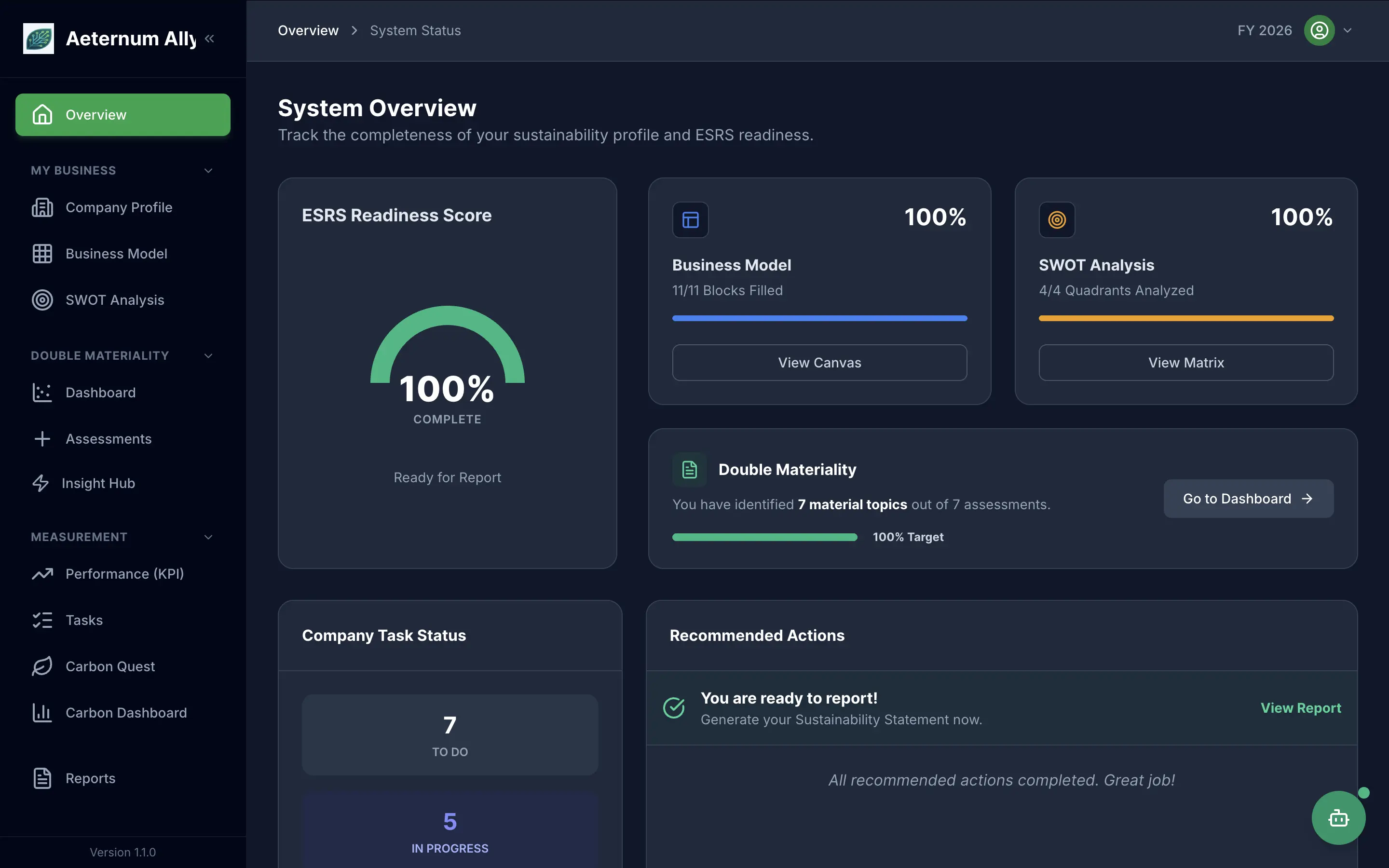
Strategy Foundation
Start with the basics that make sustainability work practical: company profile, operations, value chain, stakeholders, strategic priorities, and business context.
- Company profile and operating context in one place
- Value chain and stakeholder inputs for later assessment
- A practical starting point before reporting begins
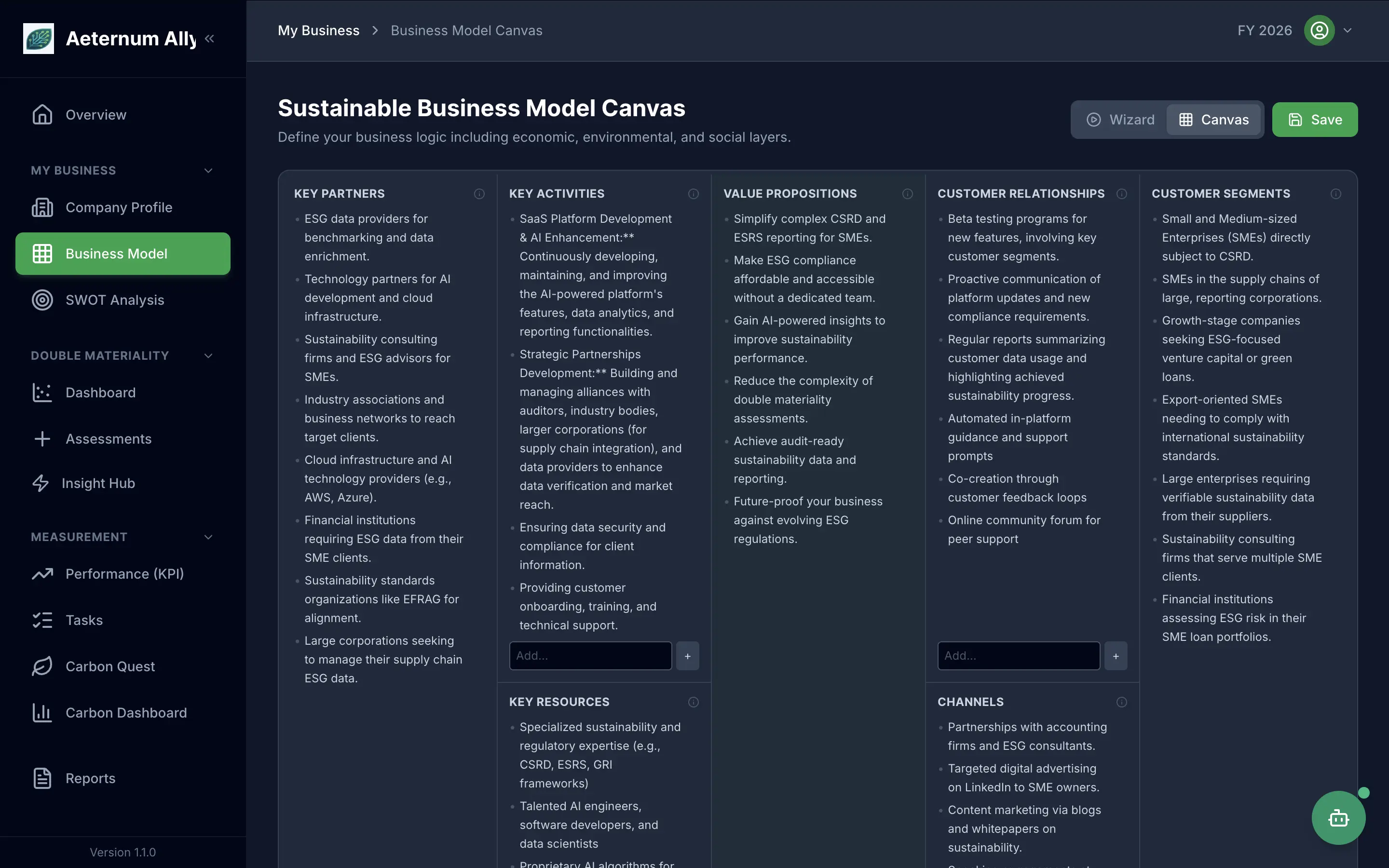
Sustainable Business Model Canvas
Start with how your business creates value. AeternumAlly helps teams map key partners, resources, activities, customers, revenue streams, eco-social costs, and eco-social benefits before moving into assessment or reporting.
- AI-assisted brainstorming for every block
- Eco-social costs and benefits built into the model
- Business context that feeds materiality and reporting workflows
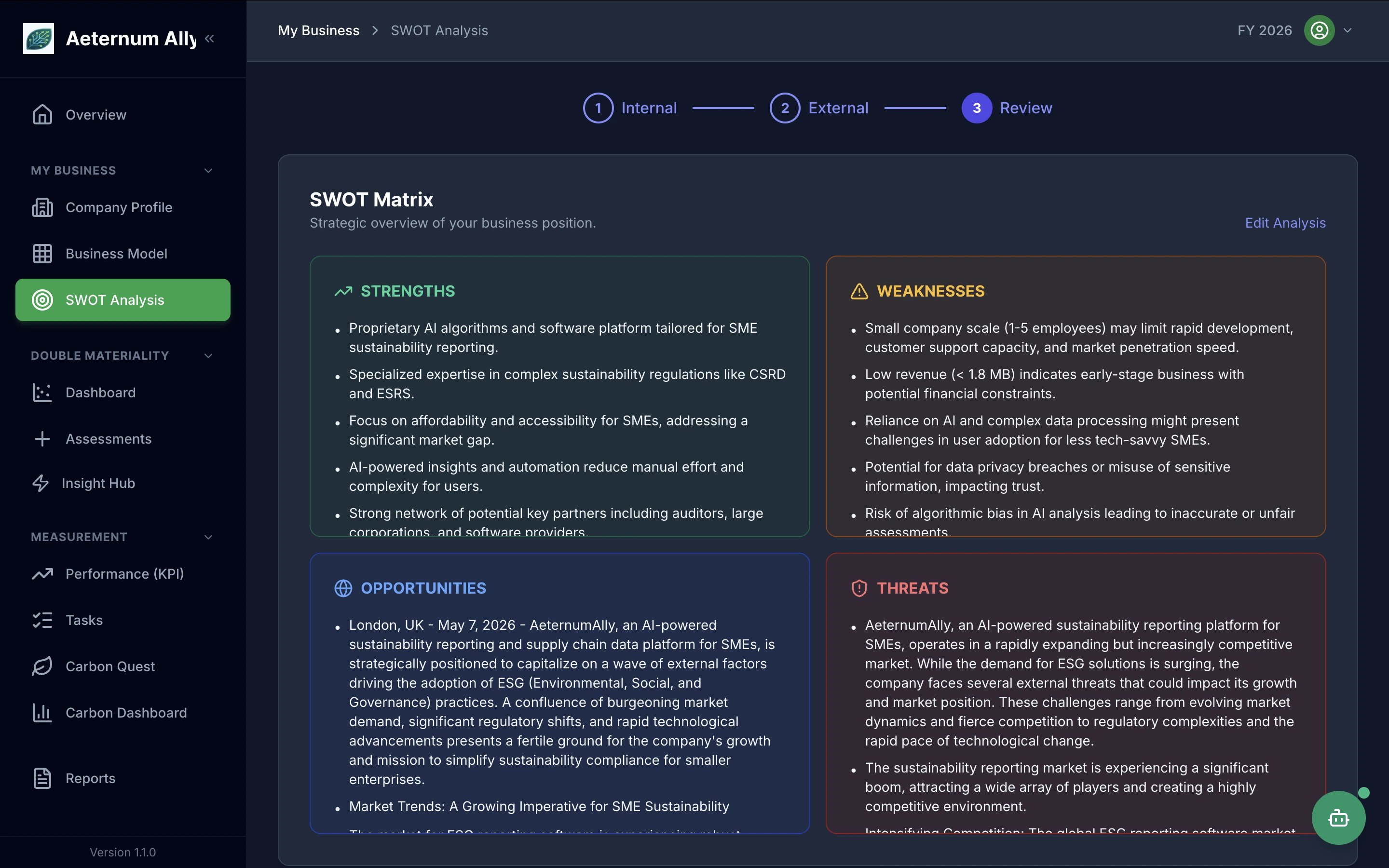
SWOT & Sustainability Risk
Connect sustainability with strategic planning. Use SWOT to identify internal strengths and weaknesses, external risks and opportunities, and market trends that may affect your sustainability priorities.
- AI-assisted SWOT support
- Market and regulatory trend discovery
- Inputs that strengthen materiality assessment and KPI planning
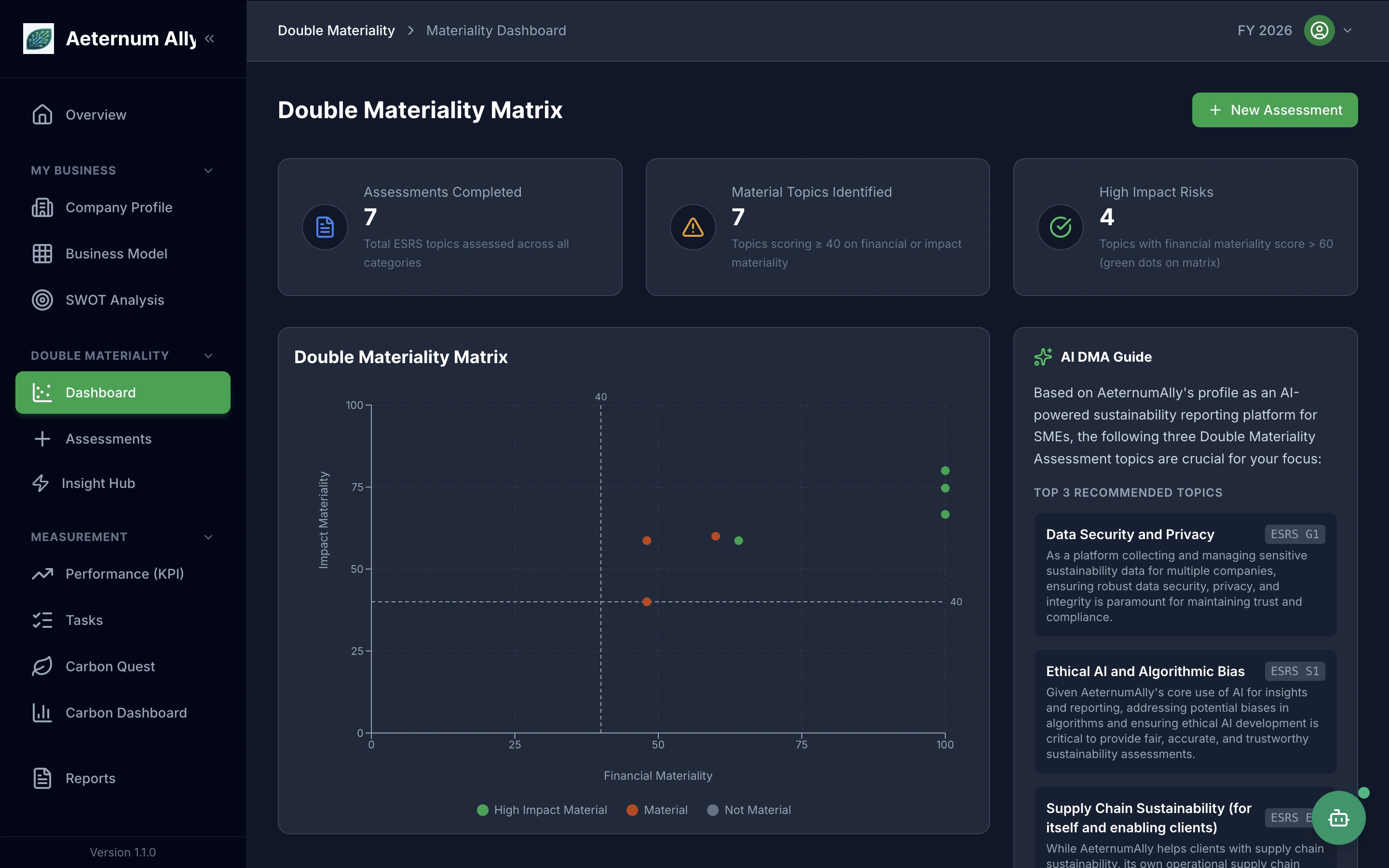
AI-Assisted Double Materiality
Assess sustainability topics from both impact and financial perspectives. AeternumAlly helps structure descriptions, scoring, reasoning, and documentation while keeping users in control.
- Impact and financial materiality assessment
- AI reasoning with transparent suggestions
- Users can review, override, and refine outputs
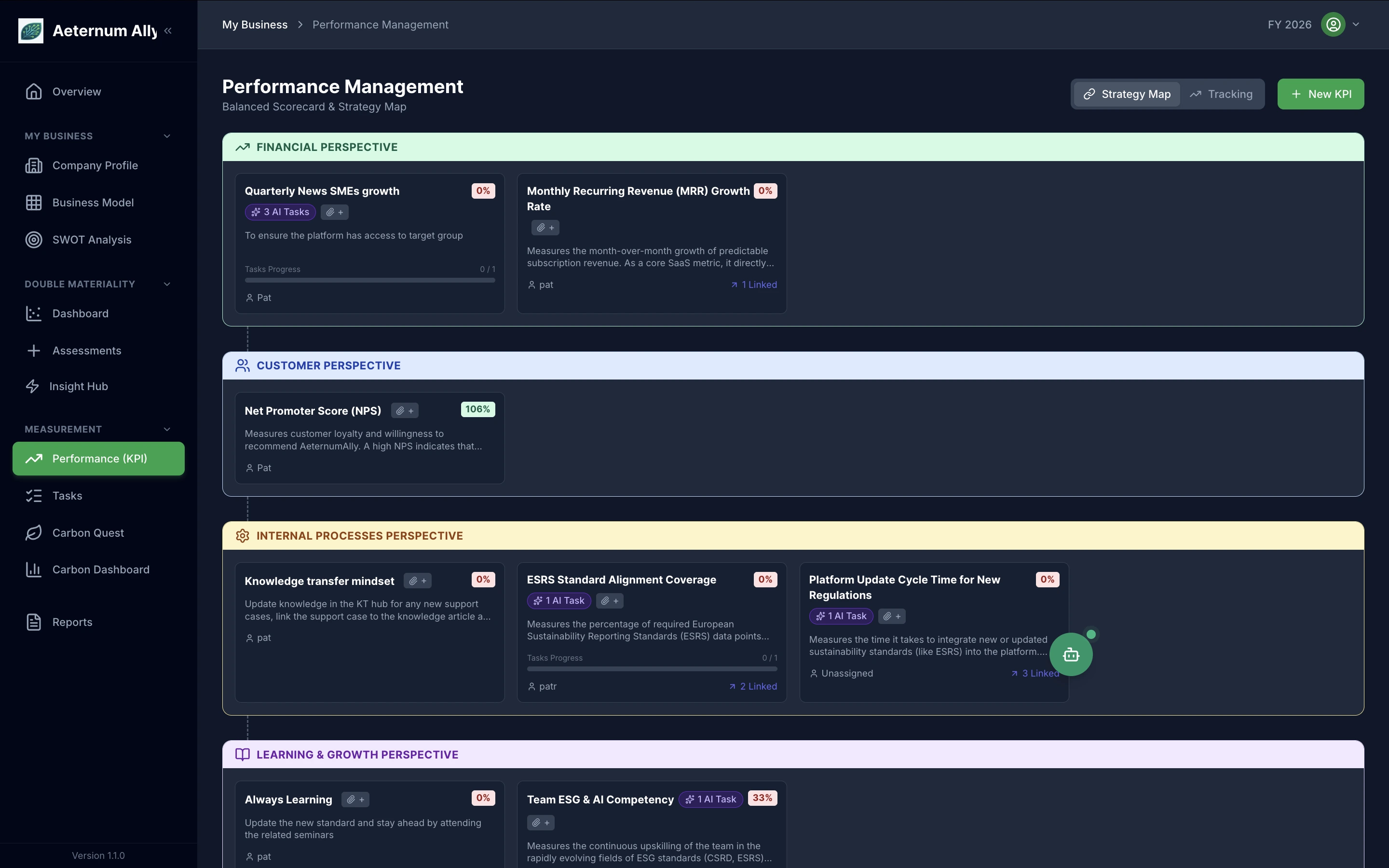
KPI & Action Management
Move from assessment to execution. Convert material topics and AI recommendations into KPIs, tasks, owners, deadlines, and evidence.
- Suggested KPIs based on material topics
- Tasks grouped into Fix, Comply, and Improve
- Evidence collection linked to action management
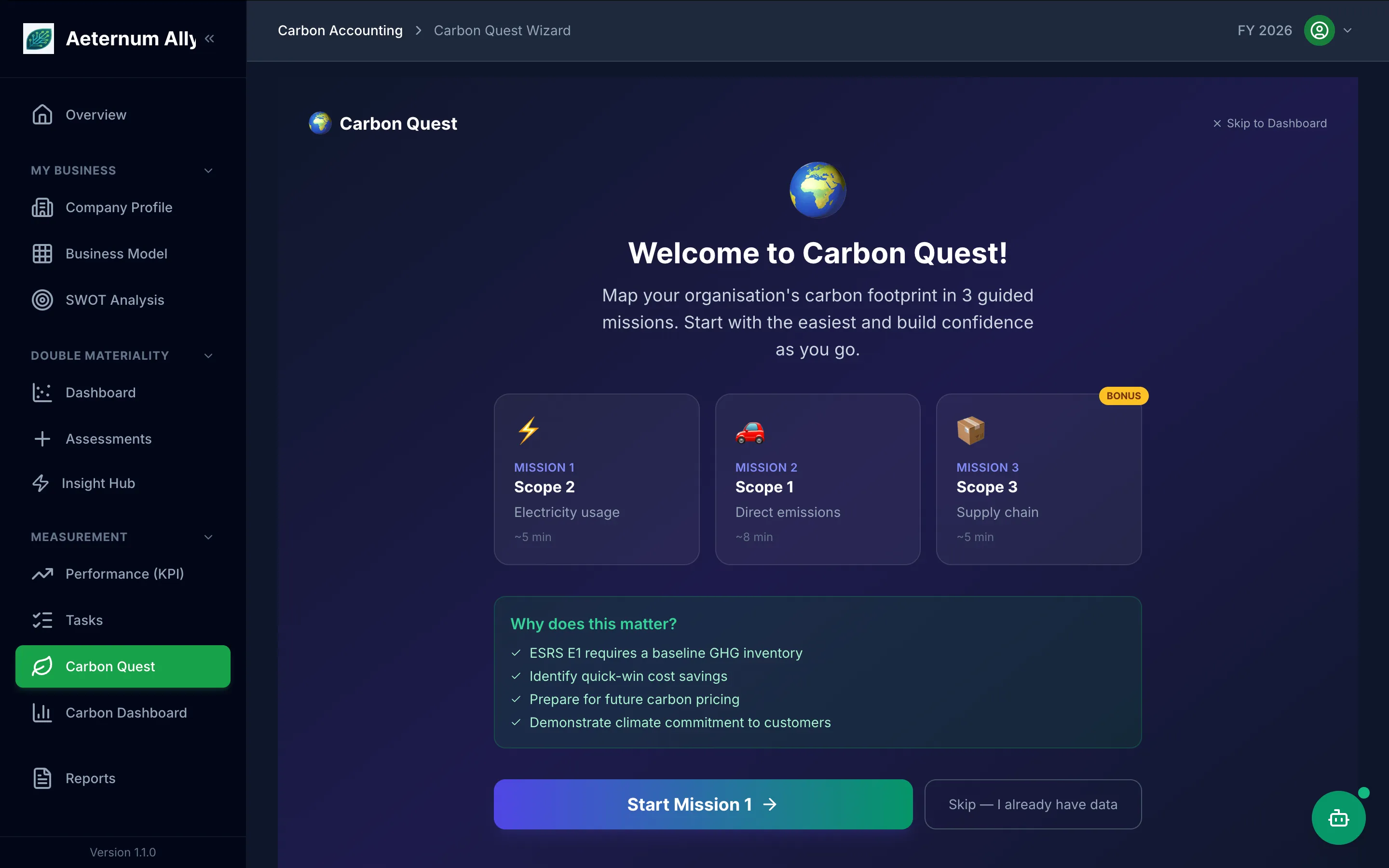
Carbon Quest
Make carbon accounting easier for non-experts. Start with Scope 2 electricity, move to Scope 1 direct emissions, and add selected Scope 3 activities when relevant.
- Guided carbon accounting missions
- Localized emission factors where available
- Carbon dashboard for tracking emissions over time
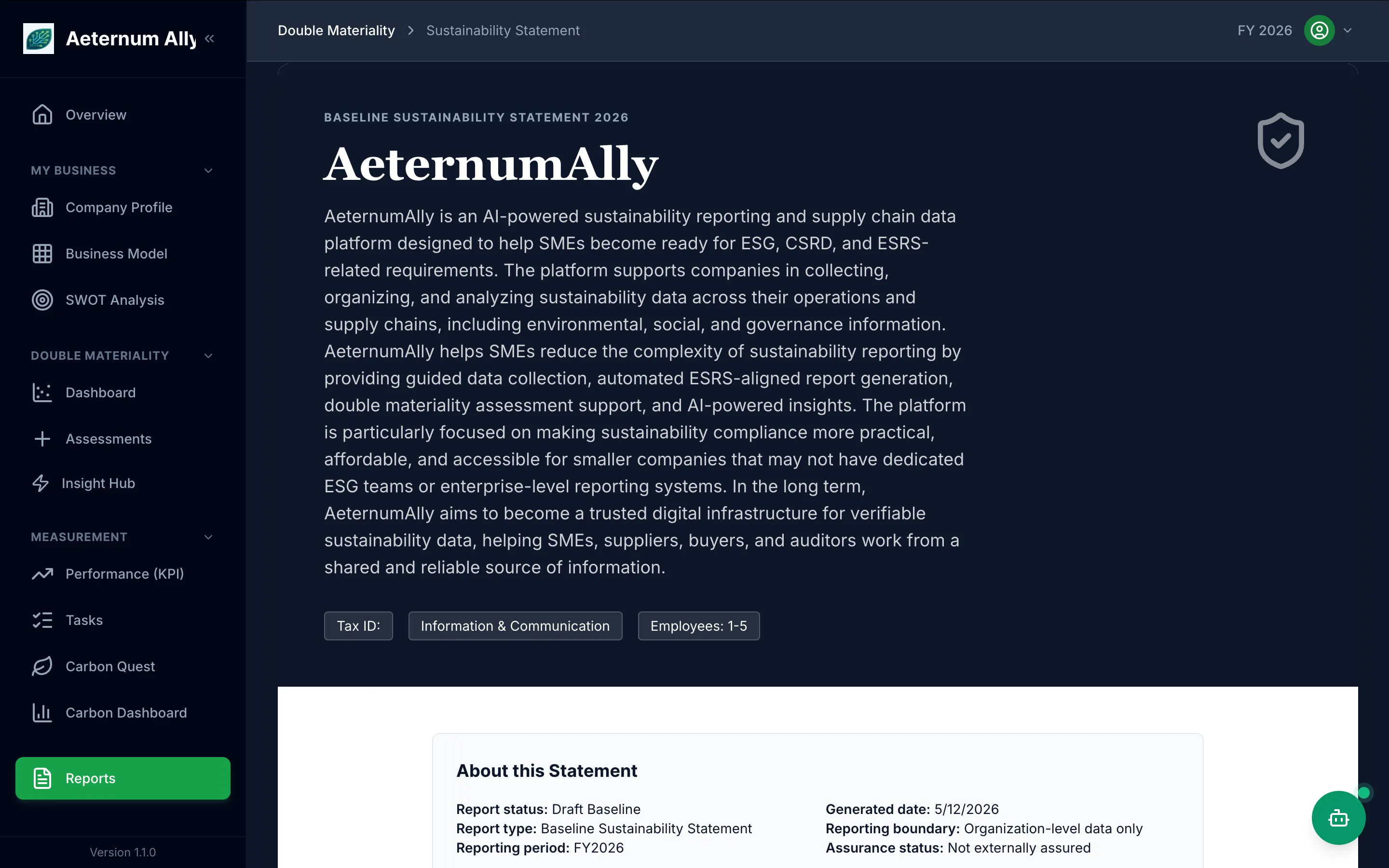
Reporting & Stakeholder Responses
Generate structured draft outputs from the data your team has already built: business context, material topics, KPIs, carbon data, and evidence.
- Draft sustainability statements for review
- ESRS and GRI mapping support
- Useful for customer, investor, lender, and supply-chain requests